
What each exchange holds now
Reserves and net flows at 15:00 UTC on 2 Nov 2026
| Exchange | Reserves | 24 hours | 7 days | Bitcoin | Ether | Stablecoins |
|---|---|---|---|---|---|---|
| Binance | $88.5B | −$1.71B | −$9.07B | 621,072 | 2.94M | $31.7B |
| OKX | $24.7B | +$154.2M | +$412.5M | 163,331 | 1.12M | $9.49B |
| Bitfinex | $14.3B | +$55.8M | +$231.5M | 159,907 | 595,538 | $507.1M |
| Bybit | $8.71B | +$106.8M | +$345.9M | 64,042 | 354,850 | $2.75B |
| Deribit | $3.59B | −$115.7M | −$176.5M | 40,022 | 160,942 | $112.9M |
| Crypto.com | $2.01B | +$6.33M | +$117.5M | 22,701 | 67,754 | $95.4M |
| KuCoin | $1.38B | +$4.45M | −$45.0M | 8,243 | 90,762 | $527.1M |
| HTX | $703.1M | +$2.88M | −$1.88M | 7,841 | 451 | $63.4M |
- Binance: $88.5B. 621,072 BTC, 2.94M ETH, $31.7B of stablecoins, $1.86B of smaller coins. Net flow −$1.71B in 24 hours, −$9.07B in 7 days. An unusual reserve outflow since 09:00 UTC on 1 Nov: $4.06B net out in the 24 hours to its worst point, 4.4% of its covered reserves. A possible withdrawal pause: no bitcoin cash and litecoin withdrawals seen since 21:00 UTC on 29 Oct.
- OKX: $24.7B. 163,331 BTC, 1.12M ETH, $9.49B of stablecoins. Net flow +$154.2M in 24 hours, +$412.5M in 7 days.
- Bitfinex: $14.3B. 159,907 BTC, 595,538 ETH, $507.1M of stablecoins, $16.0M of smaller coins. Net flow +$55.8M in 24 hours, +$231.5M in 7 days.
- Bybit: $8.71B. 64,042 BTC, 354,850 ETH, $2.75B of stablecoins, $171.6M of smaller coins. Net flow +$106.8M in 24 hours, +$345.9M in 7 days.
- Deribit: $3.59B. 40,022 BTC, 160,942 ETH, $112.9M of stablecoins. Net flow −$115.7M in 24 hours, −$176.5M in 7 days.
- Crypto.com: $2.01B. 22,701 BTC, 67,754 ETH, $95.4M of stablecoins. Net flow +$6.33M in 24 hours, +$117.5M in 7 days.
- KuCoin: $1.38B. 8,243 BTC, 90,762 ETH, $527.1M of stablecoins. Net flow +$4.45M in 24 hours, −$45.0M in 7 days.
- HTX: $703.1M. 7,841 BTC, 451 ETH, $63.4M of stablecoins, $29.7M of smaller coins. Net flow +$2.88M in 24 hours, −$1.88M in 7 days.
Reserves are every covered coin in US dollars at that hour's prices, so they also move with the price. Net flow does not: it is what arrived at the addresses we cover minus what left them. What we cover.
BitMEX closed on 23 Sep 2026; its balances and flows are history only.
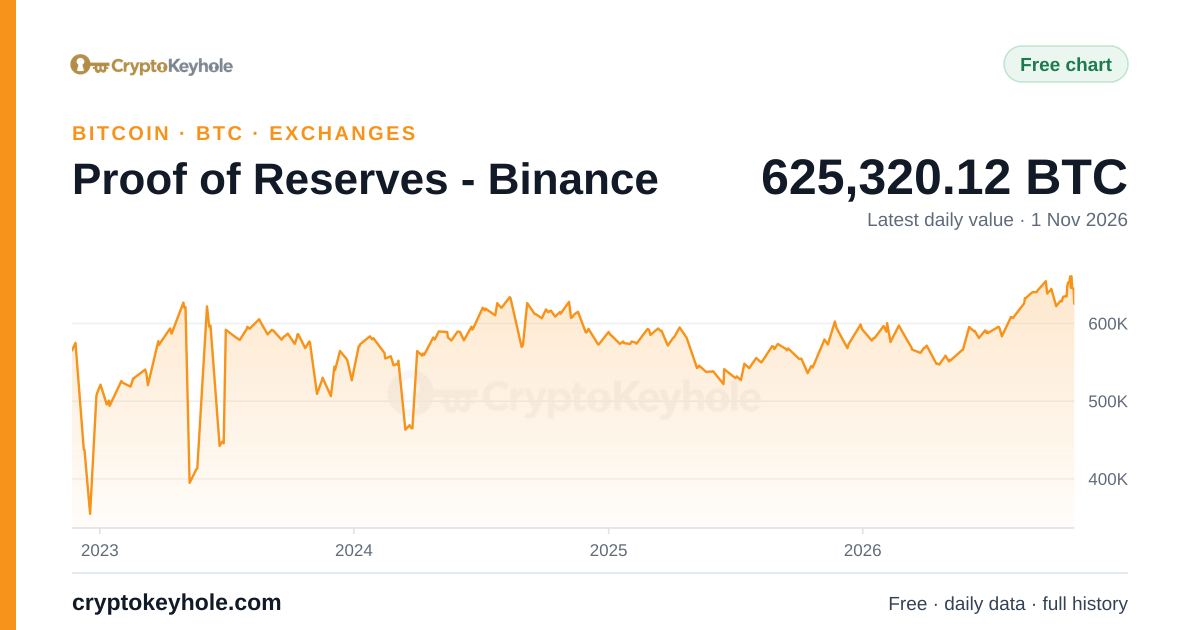
Binance's bitcoin, day by day
Binance says about $6.3 billion was taken on the night of 29 October 2026. We went through that night block by block.
You'll see two counts for Binance, from two sets of addresses. The table above uses our exchange monitor's set, built the same way for every exchange. For Binance that means the addresses in the proof-of-reserves files it published up to January 2025, plus a few that a public label list tags as Binance. One of those holds about 455,000 ETH and isn't on any list Binance has published. That gives 621,072 BTC and 2.94M ETH. Our free bitcoin and ether charts use only Binance's own lists, including the one on its proof-of-reserves page today: 81 and 48 addresses, reading 620,043 BTC at 15:00 UTC and 2,683,140 ETH at 14:00 UTC. Neither set covers coins on other networks, staked ETH or custodian addresses Binance doesn't list.
Flags open now
- Binance: An unusual reserve outflow since 09:00 UTC on 1 Nov: $4.06B net out in the 24 hours to its worst point, 4.4% of its covered reserves. A possible withdrawal pause: no bitcoin cash and litecoin withdrawals seen since 21:00 UTC on 29 Oct.
A flag is a pattern on the chain, not a statement from the exchange. A pause means an exchange that withdraws almost every hour has shown none for longer than chance and its own recent pauses would explain. An unusual outflow means reserves fell by far more than the exchange's last 90 days would suggest. Every flag, with its card.
More detail with a plan
Plus adds the hourly ranking and its history, each coin’s flows, the traffic light, pause readings and alerts on any exchange. See plans →
Binance’s reserves beside its own statement are on Plus too.
What this page can and can't tell you
We start from the wallet addresses each exchange publishes, and read every balance from the blocks of our own Bitcoin, Ethereum, Litecoin, Dogecoin and Bitcoin Cash nodes. The page refreshes as each hour closes.
- It isn't only the published lists. On Bitcoin we also count addresses our wallet clustering ties to a listed address, for every exchange here except Binance and KuCoin. A few addresses come from public label lists instead of the exchange, including the Binance wallet above.
- It is still a lower bound. An exchange can hold coins at addresses we can't see, on other networks or with a custodian, and a list goes stale between its updates.
- It shows coins, not debts. We can read what sits at an address. We can't read what an exchange owes its customers or whether the coins are lent or pledged, so this page can't prove an exchange is solvent.
- Ether means ETH at the addresses themselves. Tokens other than the dollar stablecoins on Ethereum, and ETH staked on the consensus layer, are not counted.
- Coinbase and Kraken are missing because they publish no list of their own addresses, so their coins can't be told apart on chain from anyone else's.
We publish no wallet addresses here, and we follow organisations only. Free to reuse under CC BY 4.0, crediting CryptoKeyhole with a link to this page.
Questions
Are the coins on exchanges still there?
Are Binance's coins still there?
Is Binance safe?
The chain can't settle that. It shows what sits at Binance's addresses and whether withdrawals are moving. It can't show what Binance owes its customers or how its keys are secured. Read the flags above beside Binance's own statements and its next proof of reserves.
Which exchange holds the most?
Does proof of reserves prove an exchange is solvent?
No. It shows coins at addresses tied to the exchange. Solvency also depends on what the exchange owes, and on whether those coins are lent, pledged or really belong to it. A proof of reserves is a useful check, not a guarantee.
What does a fall in reserves mean?
Coins left the listed addresses. Usually that's customers withdrawing, but it can also be an exchange moving coins to wallets it doesn't list, or a theft. The net flow, the flags and the exchange's own statements together tell you more than the balance alone.
Why isn't Coinbase or Kraken here?
They publish no list of their own addresses, so their coins can't be told apart on chain from anyone else's. Our count starts from an exchange's own list, so without one there is nothing to start from.
How often does this page update?
The readings follow the latest UTC hour that every chain has completed, and the page refreshes every few minutes. The time of the reading is shown at the top.
Open the Binance bitcoin chartExchange monitorAll free tools
Figures are calculated by CryptoKeyhole from its own nodes, starting from each exchange's published addresses, and refreshed automatically. Nothing here is investment advice.